
Polyphonic Resistance: Blogging Motherhood and Autism is under contract with Bloomsbury Press. This “book in 50 posts,” documents how a loosely connected network of mothers of autistic kids told stories that challenge problematic narratives of autism and motherhood. Instead of warrior moms and kids in need of fixing, their stories model autism acceptance, using an open-ended journey metaphor to show how their mothering is both hard and good, similar to and different from other mothering. It’s no coincidence that these stories arose in the world of mommy blogs in the early 2000s and the book also documents how technological features and practices of blogging produced a distinctive kind of time and space that facilitated their storytelling. The truths they told and the process of making sense and finding support constituted an important kind of resistance and advocacy.

Goldsmith, D. J. (2004). Communicating social support. New York, NY: Cambridge University Press.
We often turn to our friends, family, spouses, and partners for help in coping with daily stress or major crises. This classic text provides a communication-based approach for understanding why some conversations about problems are more helpful than others. In contrast to other research on the social support processes, Goldsmith focuses on interpersonal communication–what people say and how they say it, as well as their reactions to the conversations. Her studies cover adults of all ages and various kinds of stresses, ranging from everyday hassles to serious illnesses and other major crises.
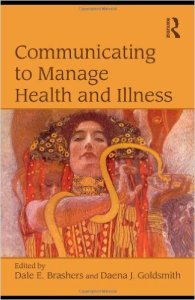 Brashers, D. E., & Goldsmith, D. J. (2009). Managing health and illness: Communication, relationships, and identity. New York: Routledge.
This scholarly edited volume advances the theoretical bases of health communication in two key areas: 1) communication, identity, and relationships; and 2) health care provider patient interaction. Chapters underscore the theory that communication processes are a link between personal, social, cultural, and institutional factors and various facets of health and illness. Contributors to the work are respected scholars from the fields of communication, public health, medicine nursing, psychology, and other areas, and focus on ways in which patient identity is communicated in health-related interactions.
 Daena J. Goldsmith